

I awoke early on this our 2nd day in Natchez. I went through the usual routine of writing, eating breakfast, and reviewing our plans for the day. Natchez is one of the many cities with a Hop On, Hop Off city tour. New Orleans also has one I soon would find out. Hop On, Hop Off (HOHO) is widespread, operating in over 100 destinations in more than 35 countries, And Natchez is one of those cities.

Our tour began at The Grand Hotel. We opted for the earliest tour, because we had a very full schedule today as you will see. The Grand Hotel overlooks the mighty Mississippi River. It was built in 2008 and has many modern conveniences. You can buy your HOHO ticket from the concierge at the hotel. Our senior tickets cost $25 each plus fees The tour provides a guided tour of the city and its history. You can get off and on at any stop along the way, hence the name Hop On, Hop Off. The double decker bus will come by each stop every hour and fifteen minutes—or so.

It was a chilly morning, but we were prepared for that. Soon the day would warm. We sat in seats on the open upper level of the bus. The driver and our guide, Patricia, stayed on the lower level. There were less than 10 people on the tour which was nice, so we had our choice of seats.
Natchez History
What makes Natchez so historically significant? During the Civil War many Mississippi cities were burned to the ground by General Ulysses S. Grant. Natchez was opposed to succession and surrendered peacefully to General Grant. Grant did not consider Natchez to be strategically significant, so he spared the city. Thus Natchez is now one of the most beautiful and historically significant cities along the Mississippi River. Mansions and Antebellum plantations were spared and have been preserved, many now being open for tours and stays.
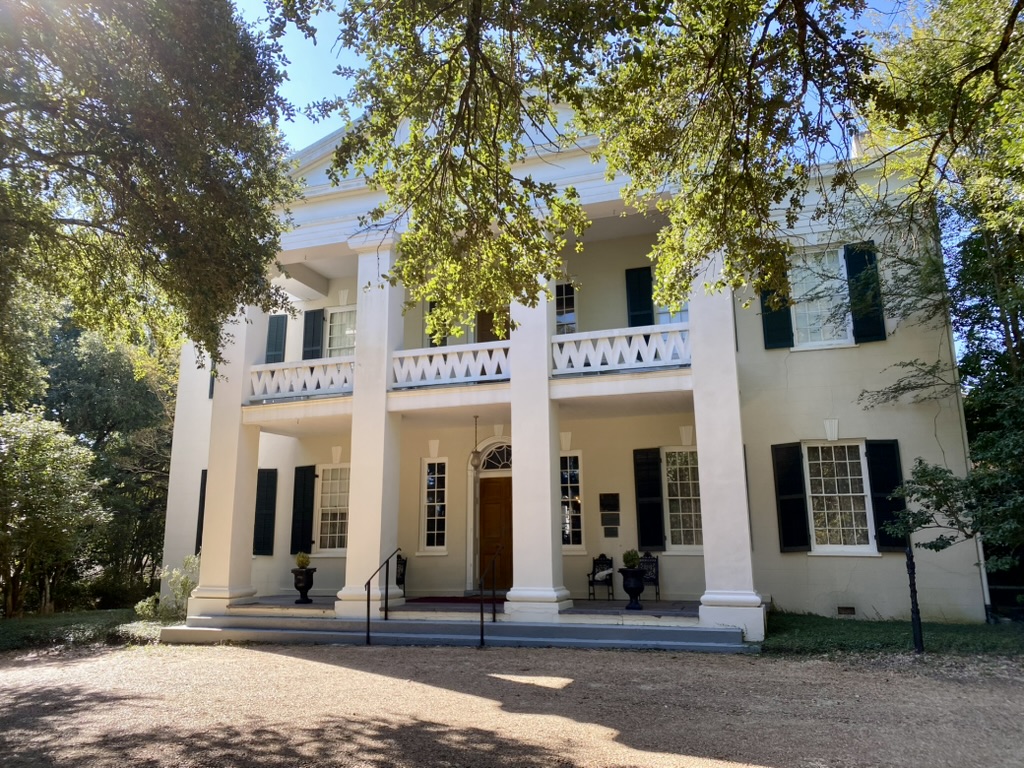
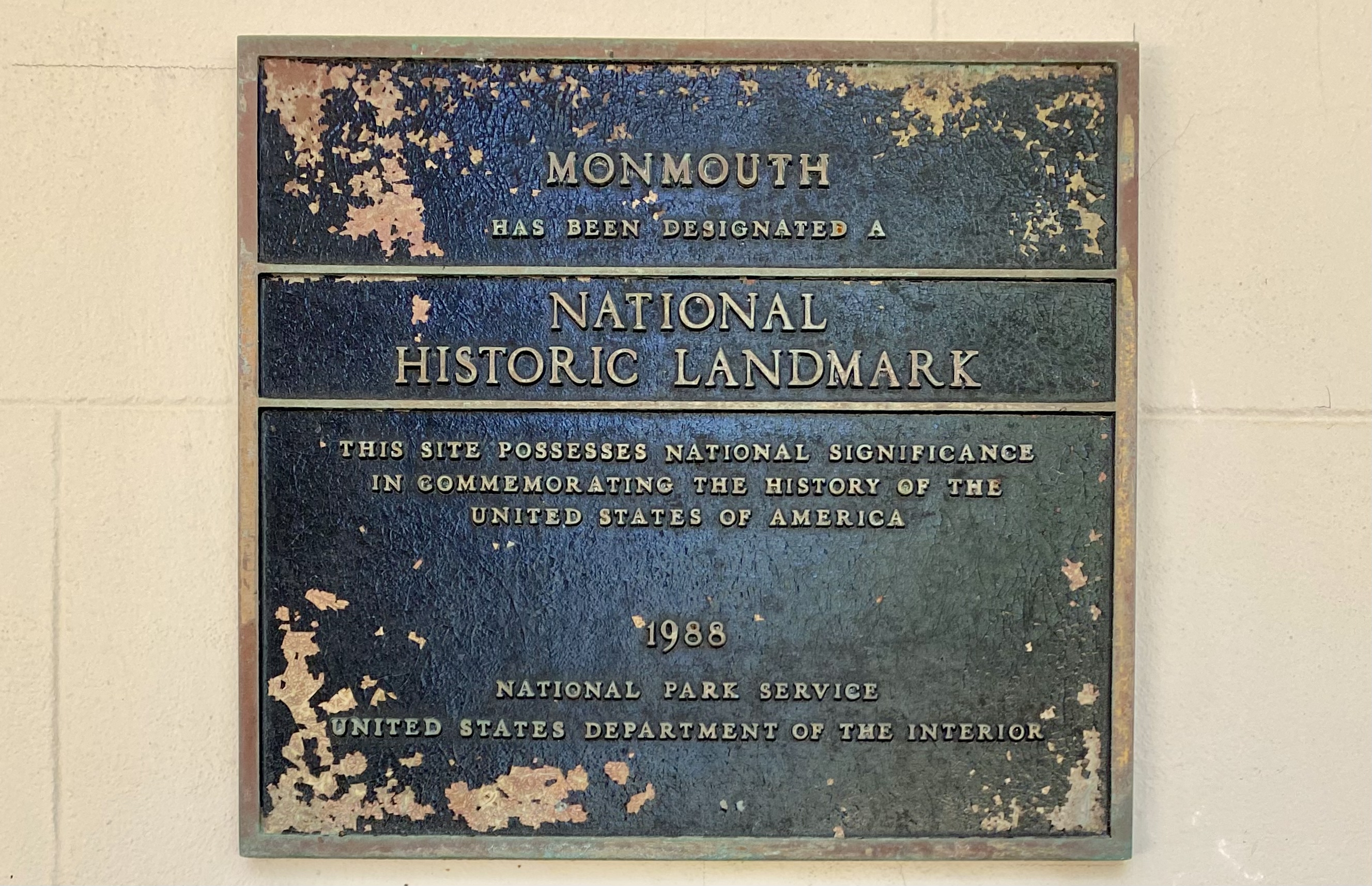
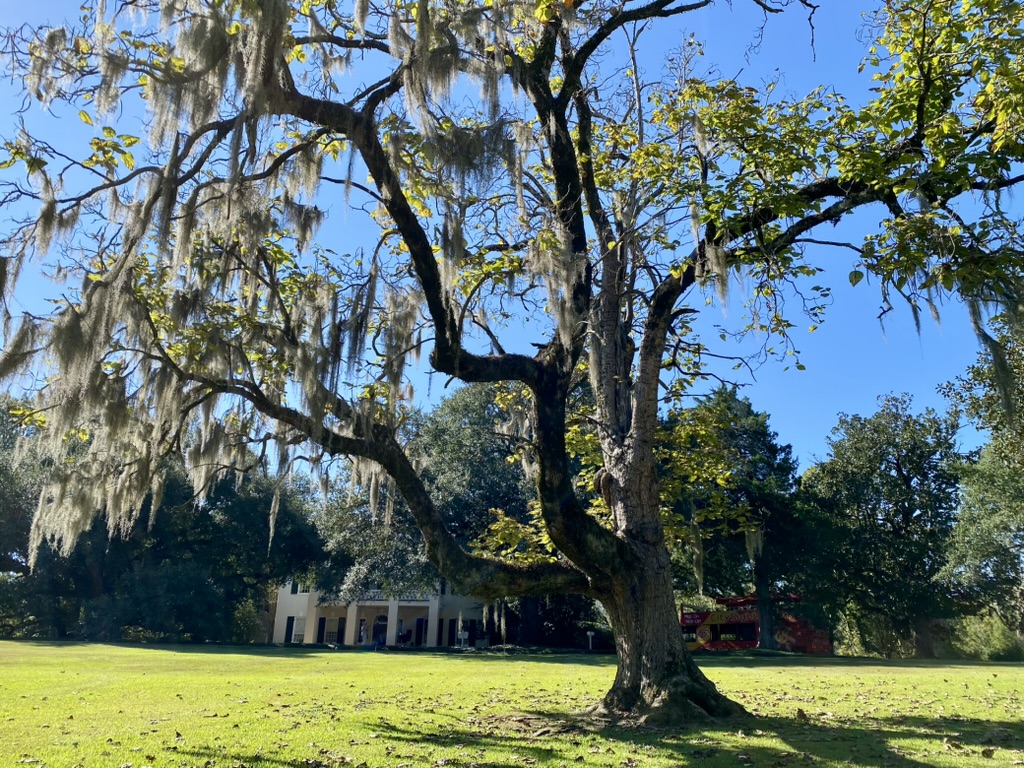
Patricia was a very informed guide, talking to us non-stop as we were driven along the route; pointing out each significant church, home, and street. The first stop where we were allowed 5 minutes to get off the bus was at the Monmouth Historic Inn. It is a National Historic Landmark. Inside the mansion is a restaurant which, according to one lady on our bus who had stayed there on a prior visit, was excellent. Accommodations, at least in the Slave Quarters building, were not so great she said. She and a lady friend, both from Tupelo, Mississippi, the birthplace of Elvis Presley, have visited here many times.
Back on the bus we headed to our next stop—Forks of the Road. It was becoming apparent, from our tour guide’s description, that cotton, sugar cane, and slave trading were three of the largest “industries” in Natchez. Before the Civil War, Natchez had more millionaires per capita than any other city in the nation at the time. This wealth was all built upon the backs of enslaved people. Second only to New Orleans, Natchez was the biggest slave trade city of its time. And Forks of the Road was where much of this slave trading took place. We got off and took pictures of the signs and the one remaining concrete slab with hooks to tie to slaves’ shackles, was still visible. A very sad commentary to human greed and cruelty.


On a lighter note, the day was warming as we neared the Grand Hotel once again. We thanked our tour guide, and followed the suit of most of the tourists, leaving a tip for her and the driver. We thanked her for a great tour and headed to our lunch spot just a few blocks away on Main Street. We planned to have an early lunch before heading to New Orleans.
Frankie’s on Main

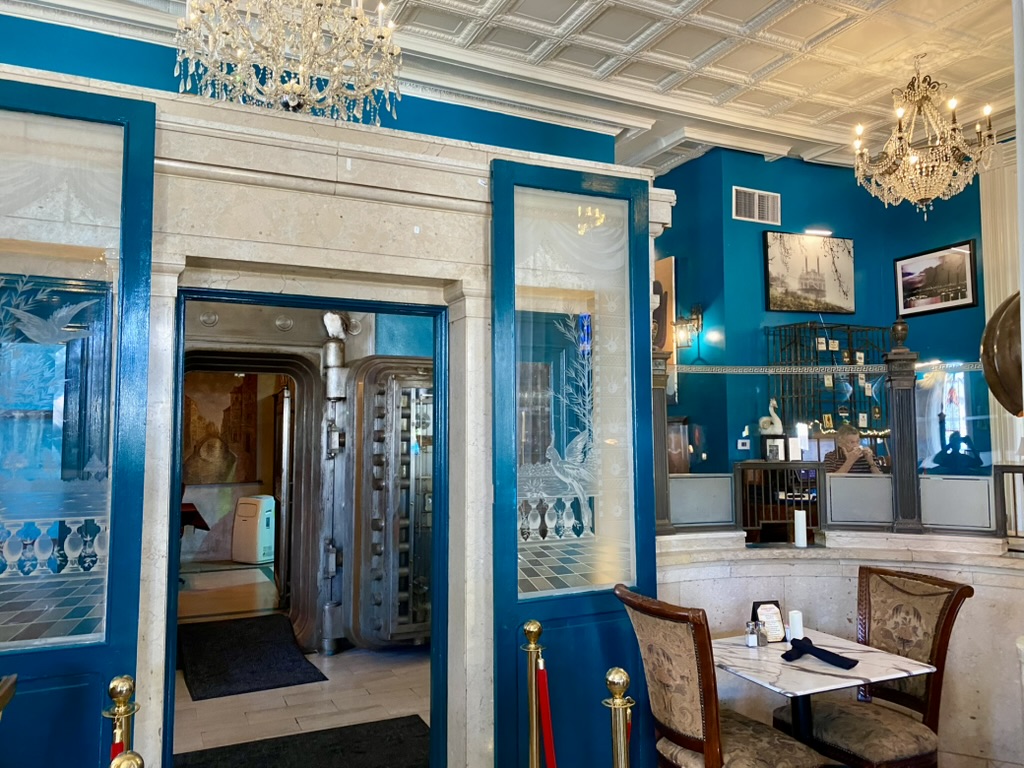
Frankie’s on Main has a history. It hasn’t always been a restaurant. In fact it only was repurposed to an eating establishment in 2022. The present-day restaurant is owned by Chef Frankie Muñoz and his parents, Marty and Cathy. This Greek Rival building with its six Doric columns at the front entrance, started out as the Agriculture Bank in 1826. At one point, after the failure of the Agriculture Bank, it was used as a saloon and restaurant named “The Bank”. The saloon eventually closed and the structure became home to several other banks and businesses. In 1916 Britton & Koontz Bank purchased the building as their main branch till sometime in the 1980’s when they moved their headquarters to another location. From that time till 2022 the building was occupied by miscellaneous businesses.
The interior still has much of the historic bank elements and decor, such as the 12 inch thick vault door, which opens to a private dining area accommodating up to 12 people. There are a lot of stained glass pieces throughout the dining room.
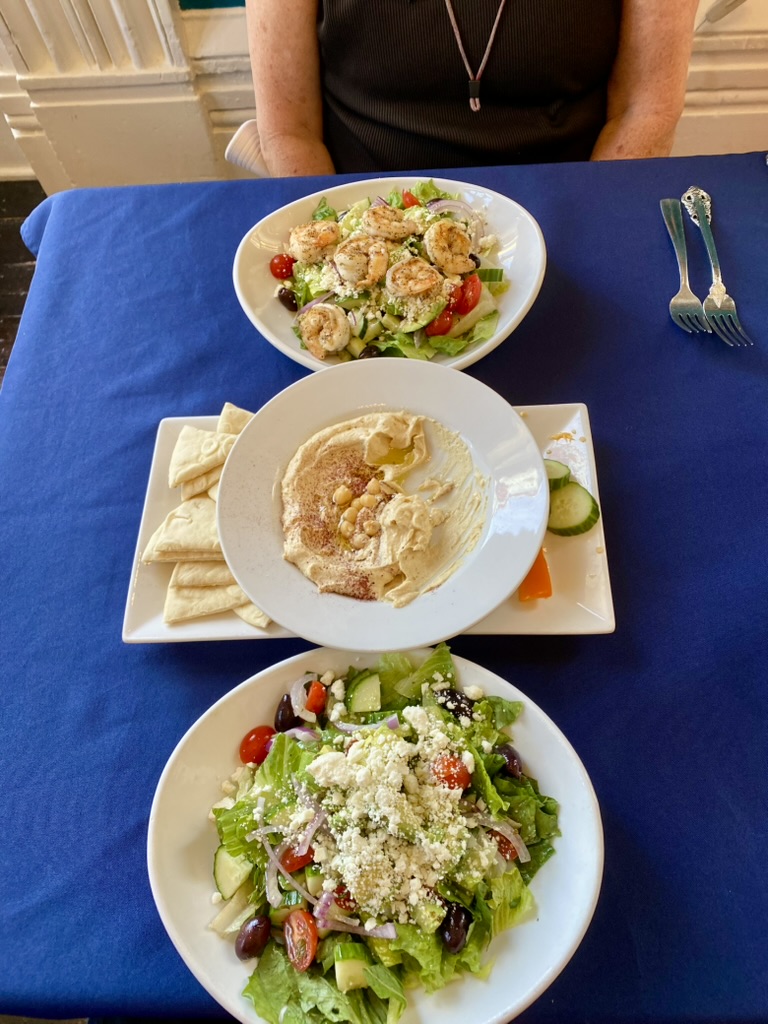
We ordered a hummus appetizer which came with a generous portion of pita bread and a few carrots and cucumber slices, and followed that with a shrimp salad which my wife enjoyed. I had an equally tasty Greek salad. We ate lighter today, because we still had a long drive ahead.
St. Mary Basilica
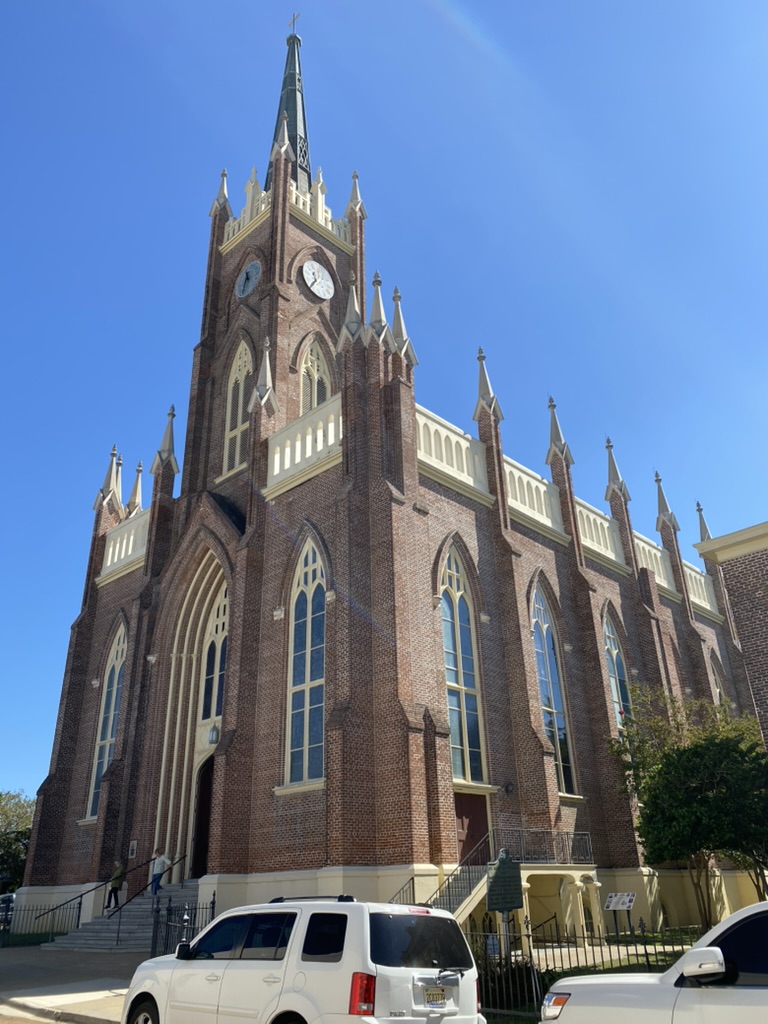
After lunch we walked to the nearby Catholic Basilica – St. Mary Basilica. It is being restored on the exterior. The other side was completely scaffolded.
St. Mary Basilica is a minor basilica, once the cathedral for the state diocese. The oldest Catholic building still in use in Mississippi, the church received its first blessing in 1843. Today, recently restored, the interior of the church is stunning in its artistry and color. The church, a landmark in the city, is an exquisite example of Gothic Revival architecture.
It is located at the corner of Main and Union Streets, and sits beside a beautiful city park where visitors may stroll, rest or picnic. St. Mary Basilica is open to the public daily (hours vary according to Holy days), and self-guided tour brochures are available in English, French, and German.
The Drive to New Orleans
The drive from Natchez to New Orleans took longer than I expected—three and half hours. Traffic got denser as we approached this large busy city. I’ll write more about our drive into the city in my next post – New Orleans – Part 1, The Hotel.
Please feel free to comment. Share your views and experiences in Mississippi.
Start at the beginning of this trip:
Coming Soon- All about New Orleans



 The Inquisitive Retiree
Leave a comment