
Drive to City Park NOMA
Today we are going to visit NOMA and the adjacent sculpture garden. This museum is a ways from the hotel so we drove there. I turned on “No highways” on Apple Maps, which made the drive easier. I didn’t have to get on the freeways to make this short drive. The streets here are literally littered with pot holes and patches. Worst roads ever and hard on the car. But it does keep the speed down. Several of the streets are lined with Live Oaks, hung with Spanish moss. Always a lovely sight.
We were able to find a good (free) parking space along the long entry road leading to the museum. It was still fairly cool, but heating up rapidly. Today will be the hottest day of our stay (mid October), yet it hasn’t been that bad.
There were dozens of Ibis birds around the large pond in front of the museum, along with Canada geese, and various ducks. They all crowded around anyone who would feed them.
 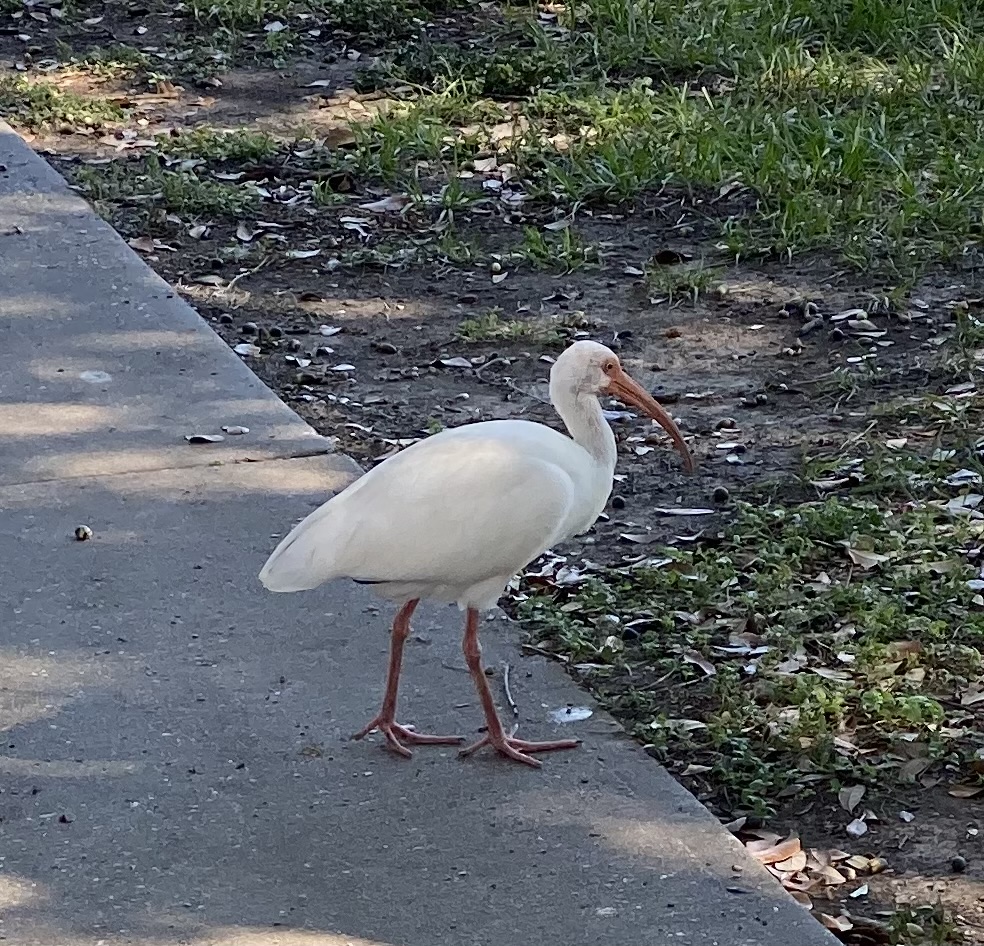
The Ibis has a fascinating history. The White Ibis is the mascot of the University of Miami. In hurricane-prone New Orleans and other coastal areas, the Ibis is known as a brave bird; the last to take shelter before a hurricane’s and the first to reappear.
Here are some interesting facts that were written about the Ibis:
The ibis are a group of long-legged wading birds in the family Threskiornithidae that inhabit wetlands, forests and plains. “Ibis” derives from the Latin and Ancient Greek word for this group of birds.
The African sacred ibis was an object of religious veneration in ancient Egypt, particularly associated with the deity Djehuty or otherwise commonly referred to in Greek as Thoth. He is responsible for writing, mathematics, measurement, and time as well as the moon and magic. In artworks of the Late Period of Ancient Egypt, Thoth is popularly depicted as an ibis-headed man in the act of writing. However, Mitogenomic diversity in sacred ibis mummies indicates that ancient Egyptians captured the birds from the wild rather than farming them. ~Wikipedia
According to local legend in the Birecik area, the northern bald ibis was one of the first birds that Noah released from the Ark as a symbol of fertility, and a lingering religious sentiment in Turkey helped the colonies there to survive long after the demise of the species in Europe. ~Wikipedia
Sydney and Walda Besthoff Sculpture Garden
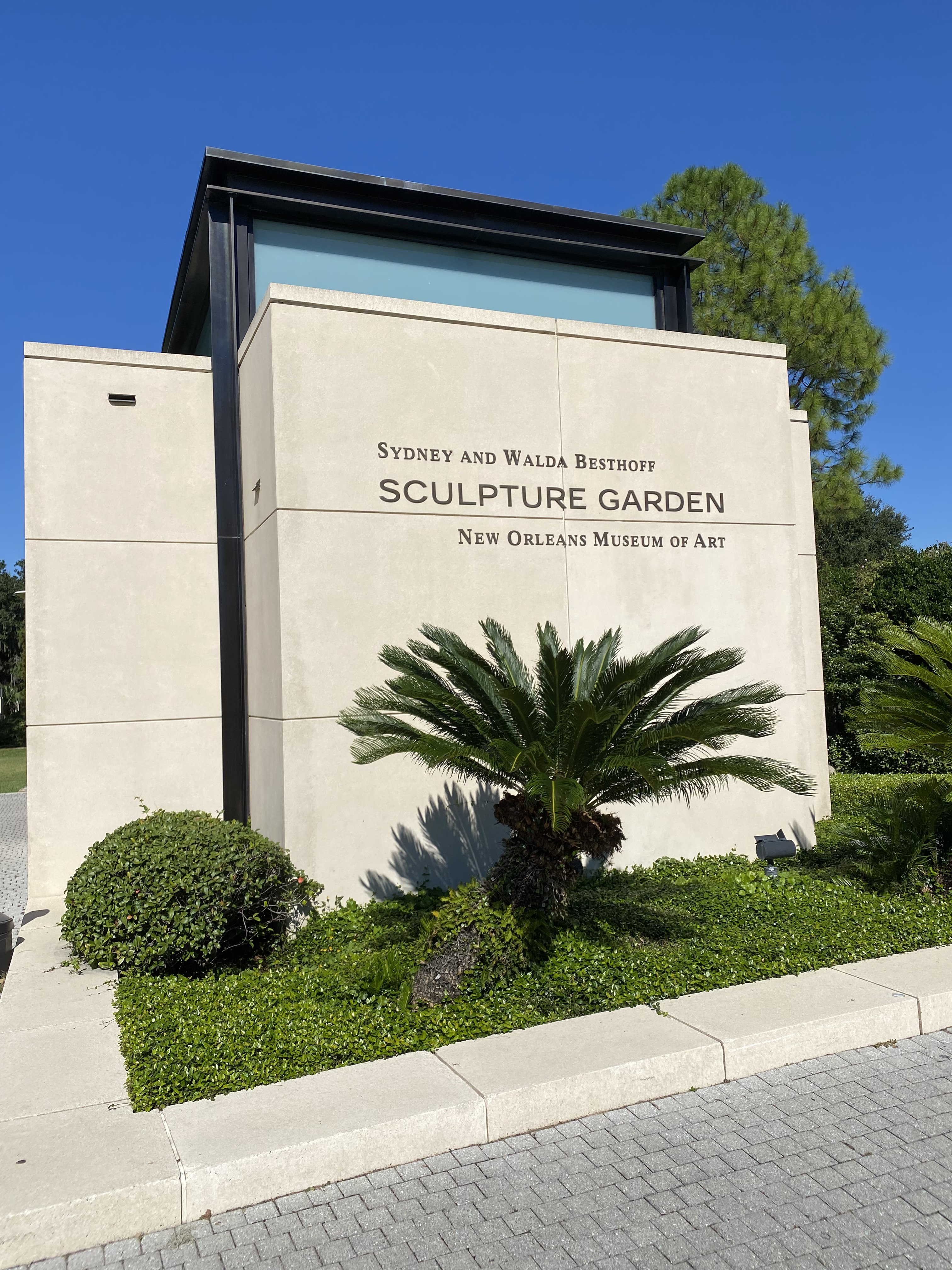
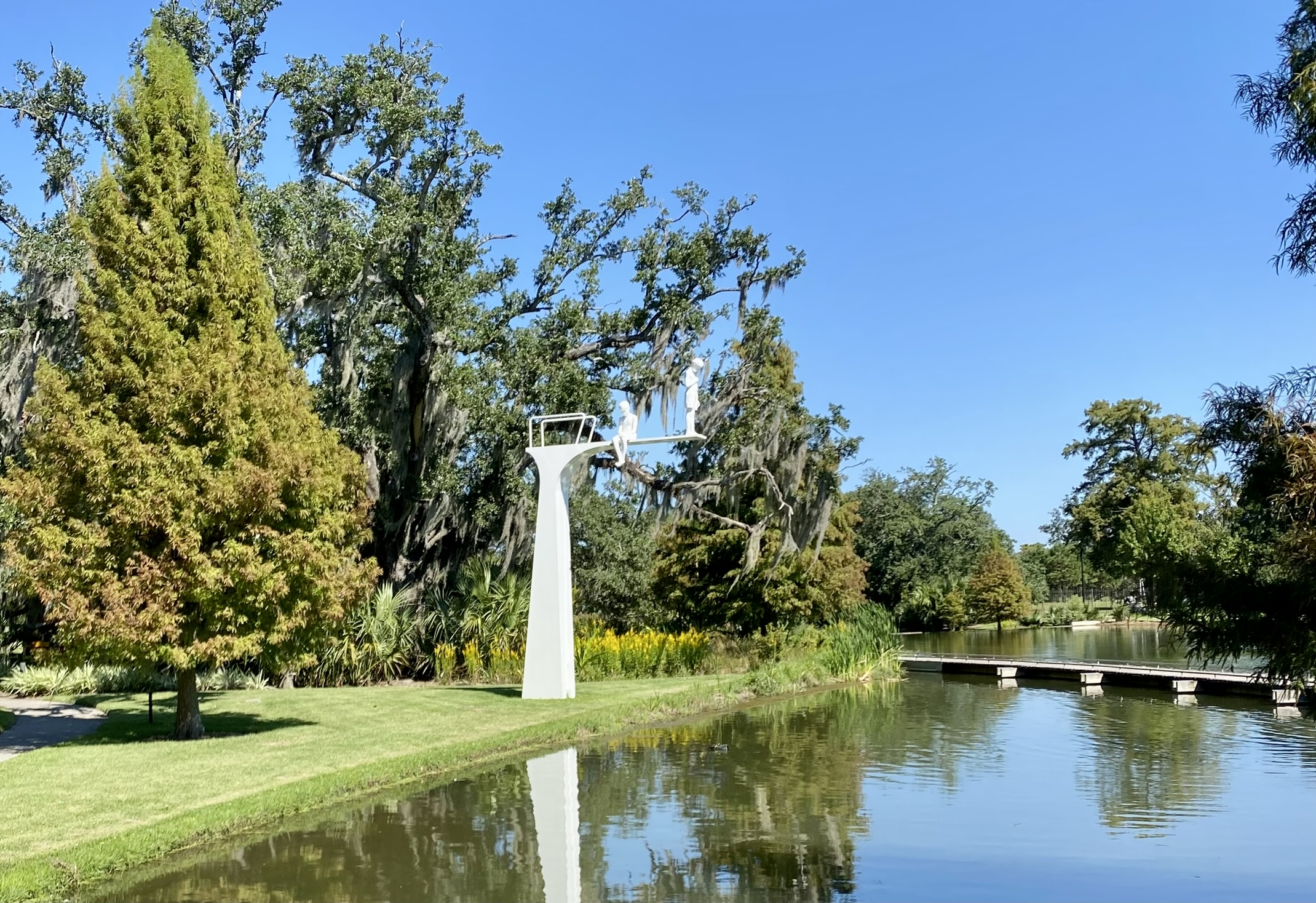
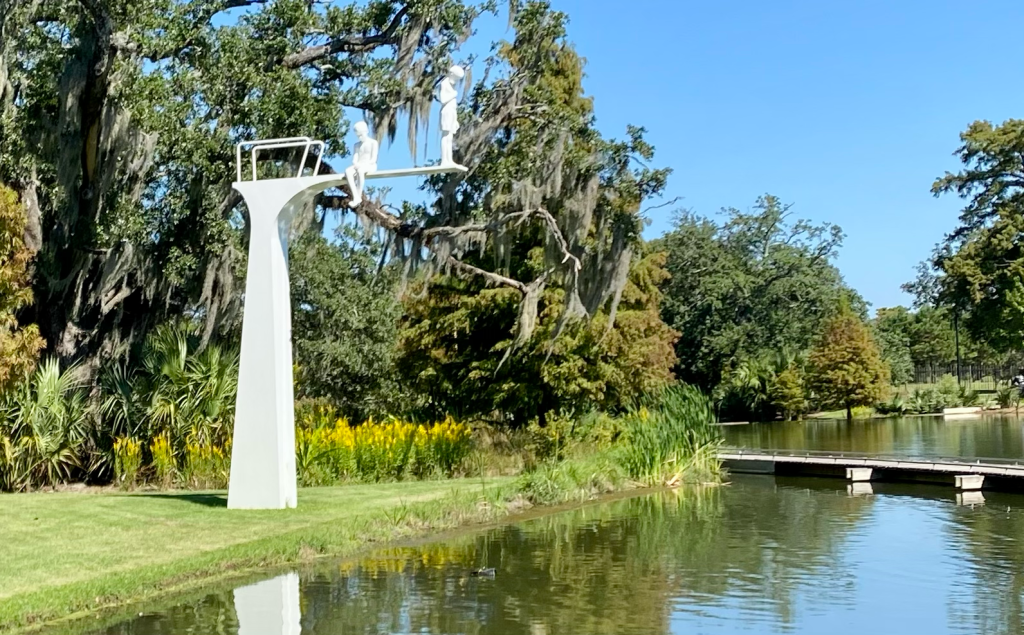
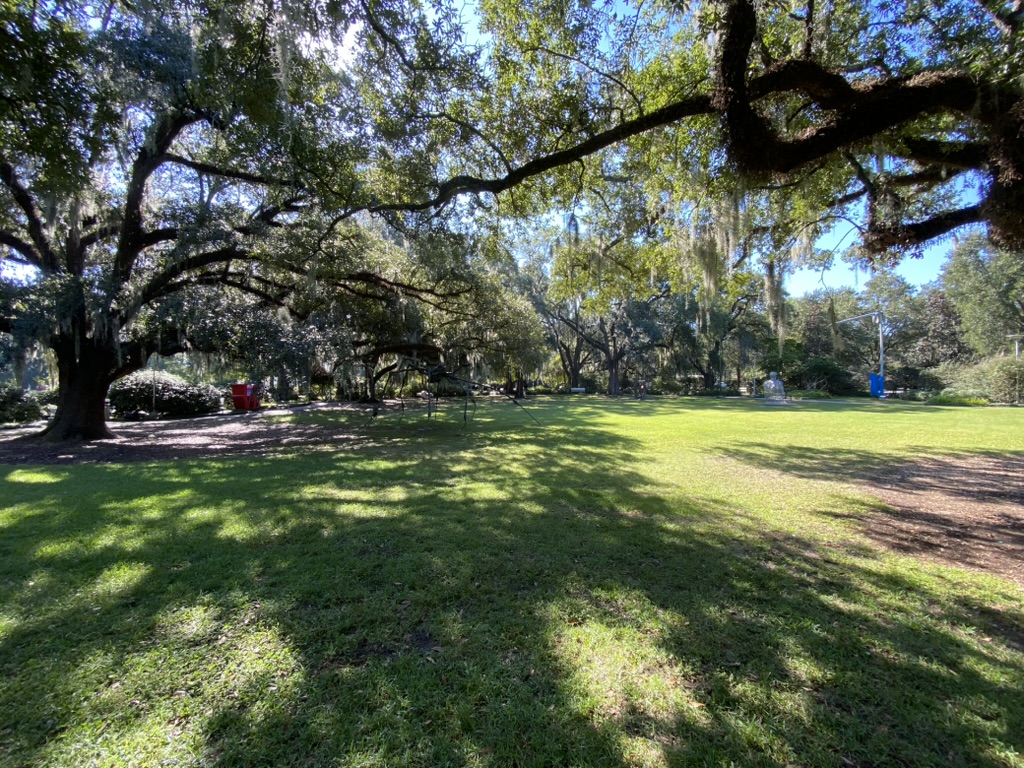
We decided to walk through the sculpture garden first. We thought we toured the entire garden, but later found out that this was only a portion of the sculpture garden. We saw several very interesting pieces and took too many photos. The walkways were spacious and the garden was well maintained.
Blue dog—a favorite of ours
The Blue Dog has long been a favorite of ours. This was a 3-sided sculpture—this side blue, the next yellow, and the third side, red.
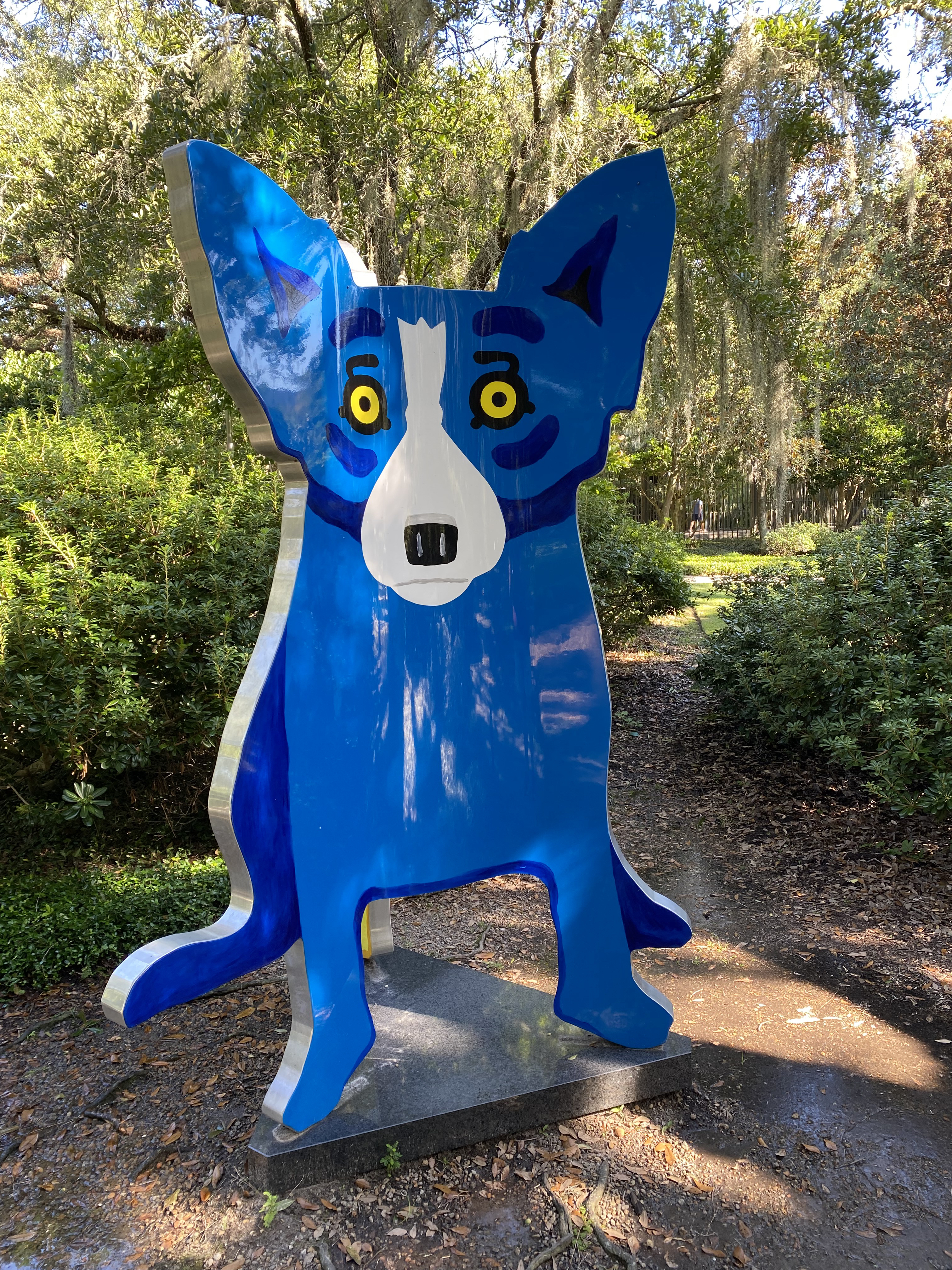
About the originator of Blue Dog—per Gemini
The “Blue Dog” was created by George Rodrigue (1944–2013), a celebrated artist from New Iberia, Louisiana. While the Blue Dog became a global pop-culture icon, his life’s work was deeply rooted in preserving and interpreting Cajun culture.
The Origin of the Blue Dog
The iconic image actually began as a monster. In 1984, Rodrigue was commissioned to illustrate a book of Cajun ghost stories. He chose to depict the loup-garou (a French-Cajun werewolf legend).
The Model: He used his deceased studio dog, a Terrier-Spaniel mix named Tiffany, as the visual reference.
The Evolution: Originally intended to be a scary, red-eyed creature in a swamp, the public fell in love with the image. Over the next decade, the “loup-garou” softened into the friendly, inquisitive, [yellow-eyed] “Blue Dog” we recognize today.
Karma
This striking sculpture is titled “Karma” by the South Korean artist Do Ho Suh.
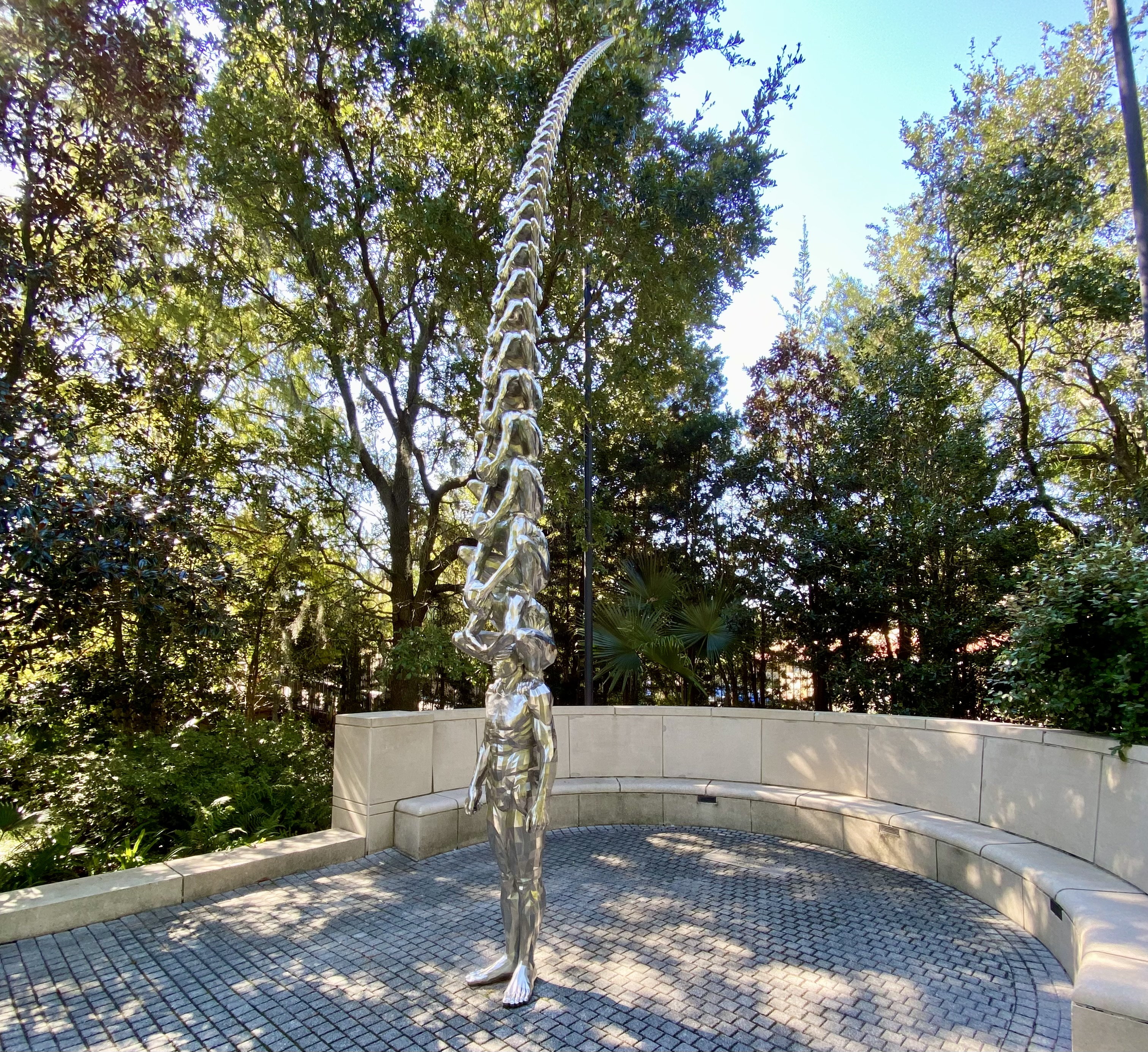
Key Details About the Piece:
The Concept: It consists of 98 cast stainless steel figures. Each figure is blindfolding the one below it, creating a curved, spine-like column that reaches toward the sky.
The Meaning: The artist often explores themes of individuality, collective identity, and the weight of history or ancestry. The “Karma” series suggests a chain of lives or events that are inextricably linked, where each person’s vision is obscured by those who came before them.
Untitled
This lovely piece is an Untitled work (1997) by the world-renowned British-Indian artist Anish Kapoor.
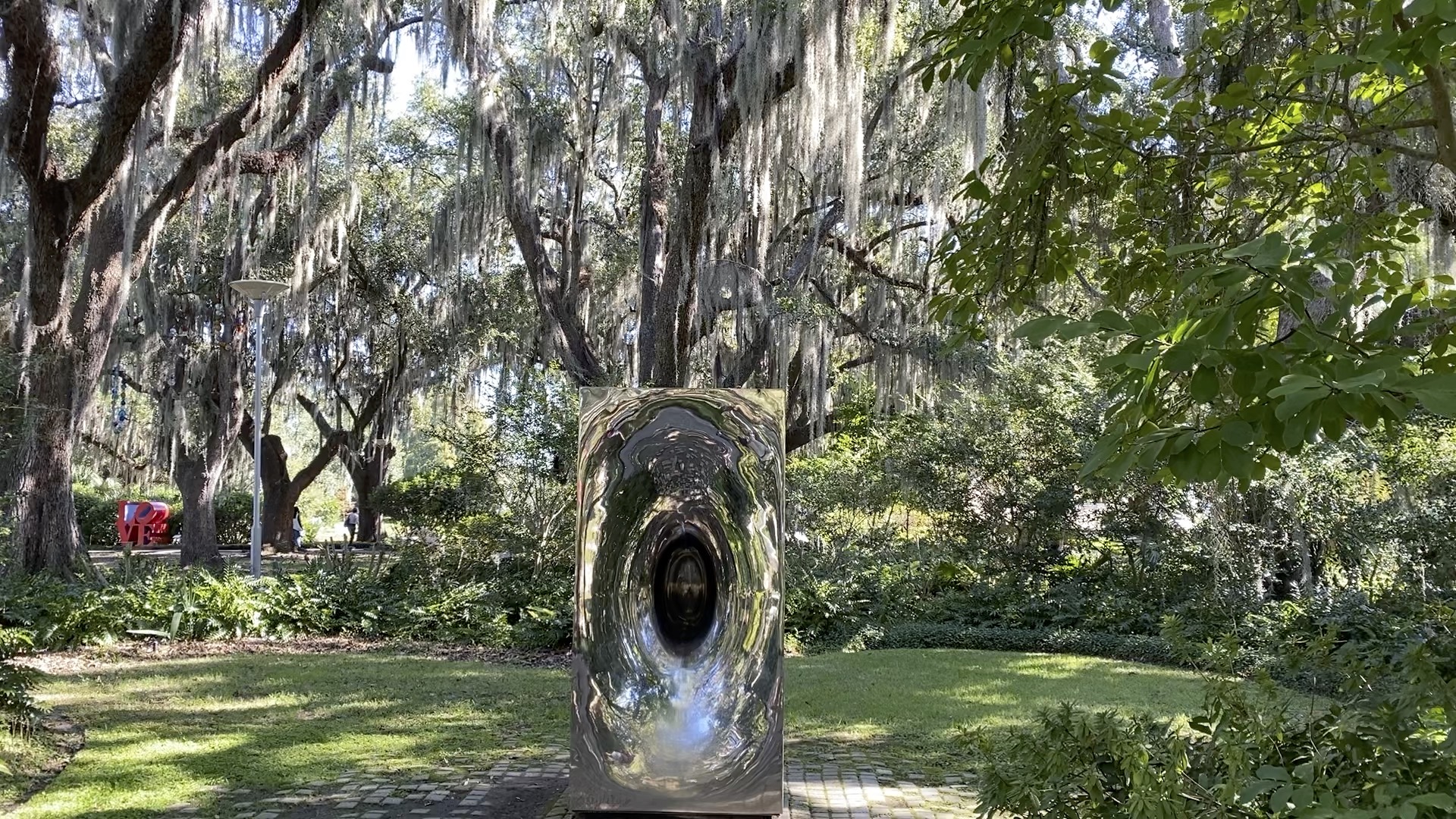
Here’s how Gemini describes this piece of art:
The Material: It is made of highly polished stainless steel. Kapoor is famous for using this “mirror” effect to challenge how we perceive space—most notably in the “Cloud Gate” (The Bean) in Chicago.
The “Void”: The central feature is a concave, funnel-like indentation. Kapoor often explores the concept of the “void,” where the sculpture seems to swallow light or pull the viewer into an infinite space.
The Experience: As you walk around it, the reflection of the surrounding mossy trees and sky distorts, making the solid metal object feel almost liquid or ghostly.
NOMA – The New Orleans Museum of Art
Entry tickets for seniors were $15 each, and we received NOMA stickers to put on our shirts. The museum is three stories tall, so we began our exploration on the top floor and made our way down. Some exhibits were fascinating, while others were quite typical of what you’d find in most museums. The third floor showcased art and objects from Japan, China, Africa, and Central America. Here’s just one of the many intriguing art pieces from these imaginative countries:
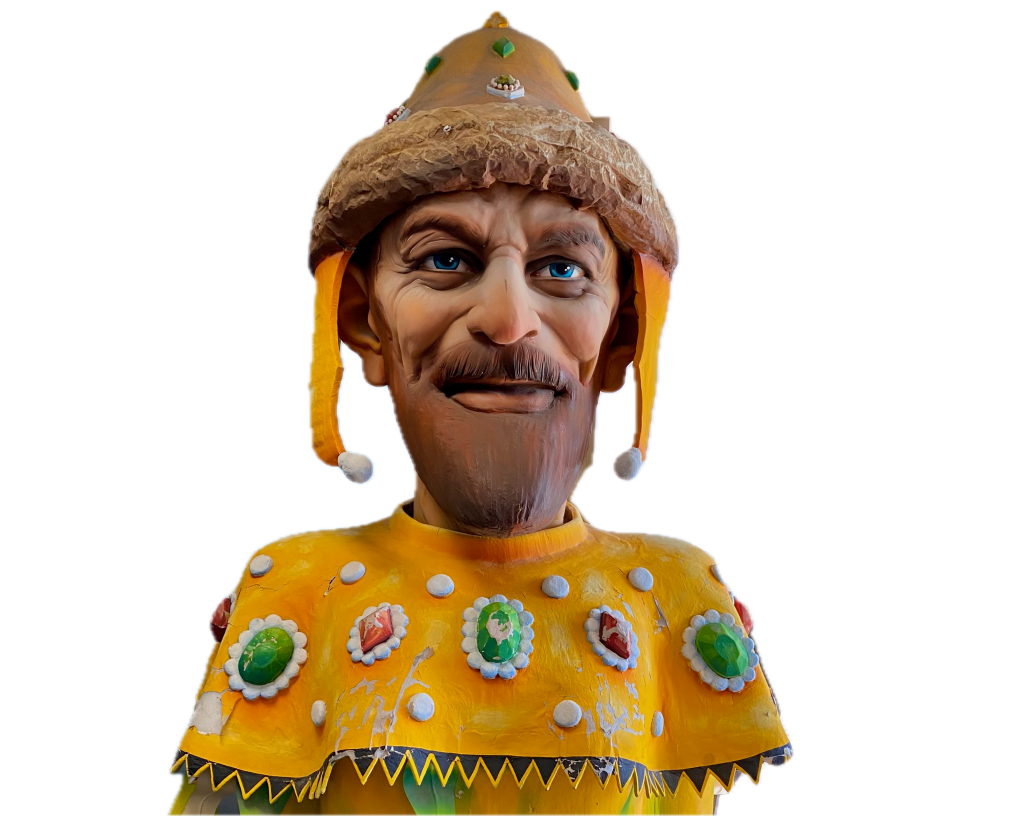
Multi-headed Bush Spirit Guardian Figure
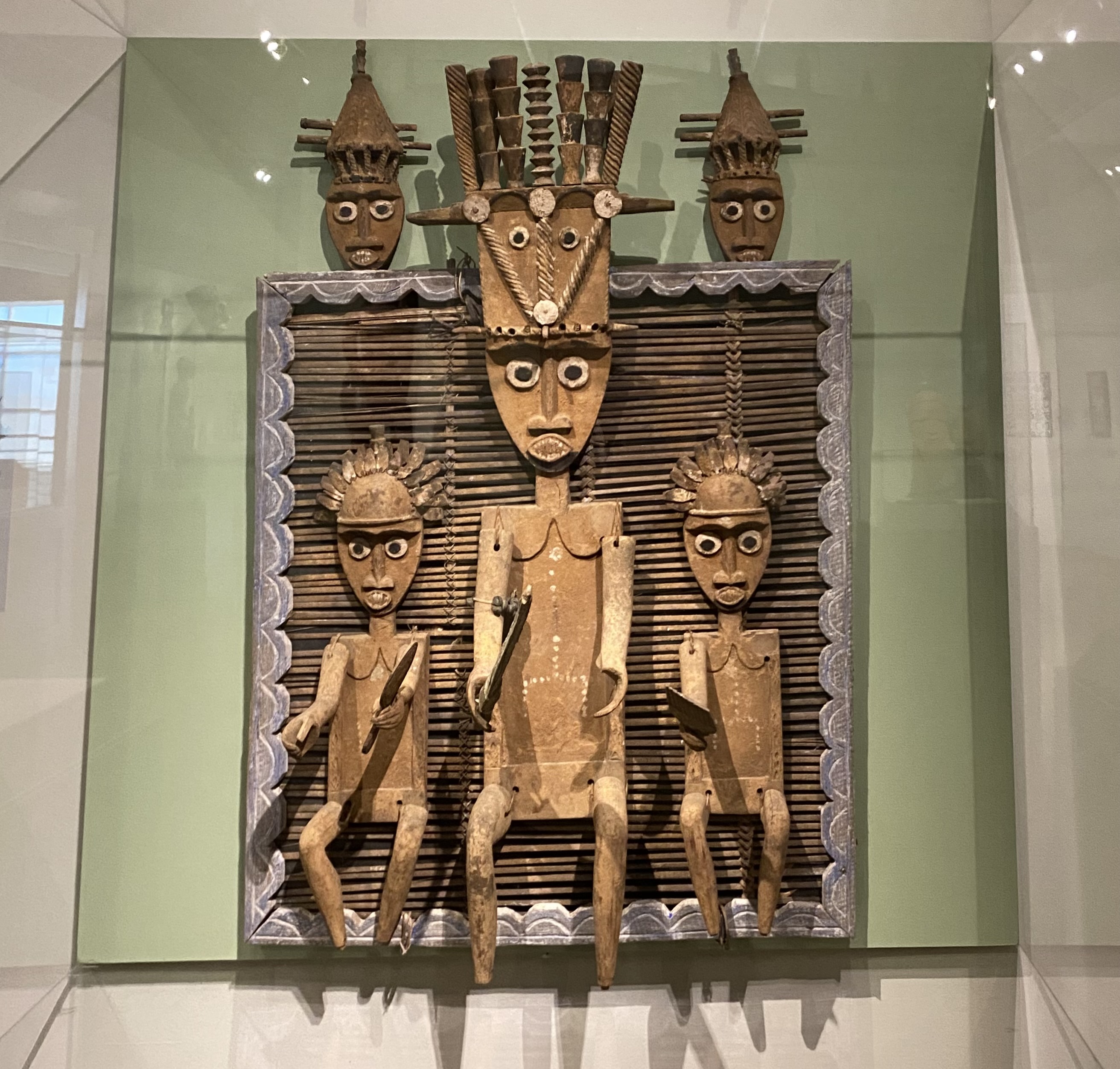
Known as Duein Fubara, or “forehead of the dead,” these figural ancestor screens were created to honor, memorialize, and communicate with deceased leaders of trading or “canoe houses,” which were used to navigate the Niger Delta’s tributaries. Transatlantic trade flourished in the region during the 19th century, bringing prosperity to the Kalabari and increasing their contact and commerce with Europeans. The screen’s construction, incorporating ship joinery techniques, further reflects its nautical associations and the accompanying cultural exchange.
As is fitting for a wealthy trading tycoon, the central figure represents the deceased house leader wearing a masquerade headdress befitting his rank in life. The flanking figures represent his followers or powerful priests. All display symbols of status and authority, such as weapons and trade items. The white dots on their torsos represent bones, recalling ancestral connections to the human world. While the overall composition recalls European portrait conventions, the figures’ alert expressions, emblems of authority, and symmetrical geometric forms are distinctly Kalabari in character.
Label authored by Lauren Goforth, M.A., Museum Studies, Southern University at New Orleans.
We moved pretty quickly through it all; not stopping to read all the signs along the way. On the 2nd and 1st floor were many early paintings – some of a religious nature. The protestants at the time, were threatening the Catholic Way, so the Vatican commissioned a lot of Virgin Mary and baby Jesus paintings, as well as the Apostles preaching to the masses. Early media propaganda at work.
This concludes my series on New Orleans. It is a city worthy of your attention. Its history is vast and influential. I’m really glad we had the opportunity to spend 5 days there. It was totally worth it. Will I go back any time soon? Probably not. Big cities are complex and expensive. Yet this one was well worth our time and money. Give its go. You won’t regret it.
Maybe you have visited the gardens and museum here. If so, leave a comment about your adventure. Thanks.


 The Inquisitive Retiree
Leave a comment